

Table of Contents
- How to Organize Small Laundry Rooms: Start With a Plan
- Maximizing Vertical Space and Wall-Mounted Storage
- Small Laundry Room Storage Ideas: Pedestal Drawers and Multi-Functional Furniture
- Laundry Room Organization Tools: Sorting Systems and Cabinetry
- Space-Saving Laundry Room Hacks: Hidden Storage and Compact Appliances
- Maintenance and Moisture Control for Long-Term Organization
- Common Mistakes to Avoid When Organizing Small Laundry Rooms
- Conclusion: Your Small Laundry Room Transformation Starts Now
Last Updated: July 12, 2026
How to Organize Small Laundry Rooms: Start With a Plan
Learning how to organize small laundry rooms begins with understanding your space and workflow. Most people purchase storage products first, then figure out where to put them, a backwards approach that wastes money and creates clutter. Successful small laundry room organization starts with assessment, decluttering, and planning.
Assess Your Current Layout and Workflow
Before buying anything, measure your space and understand how you actually use it. Take photos from multiple angles, note appliance dimensions, and identify natural traffic patterns. Spend one week observing your actual workflow: Where do you fold clothes? How do you sort laundry? Where do you hang delicates?
Declutter Before You Organize
A cluttered laundry room isn't a storage problem, it's a decision problem. Remove expired cleaning supplies, duplicate bottles, broken baskets, and dried-up treatments. Be ruthless. After decluttering, you'll likely have 30-40% less to store, which fundamentally changes what's possible in your space.
Maximizing Vertical Space and Wall-Mounted Storage
Small laundry room storage starts with one principle: use walls instead of floor space. Vertical storage is your greatest advantage in a compact room.
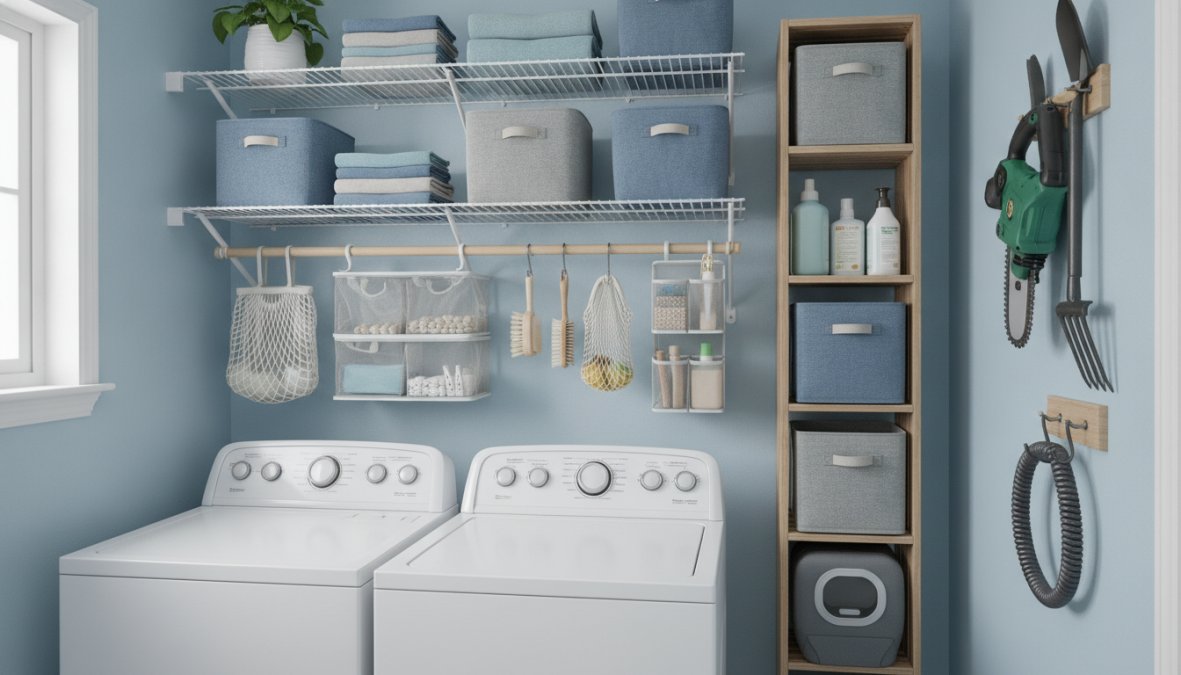
Install Wall-Mounted Racks and Shelving
Wall-mounted shelving is the single most effective use of vertical space. Install shelves above your washer and dryer, along side walls, and above doorways. Choose shelves rated for the weight you'll store, floating shelves typically hold 25-50 pounds per shelf depending on hardware.
Wall-mounted drying racks are particularly valuable. A retractable drying rack mounts flat against the wall and pulls out only when needed, giving you hanging space for delicates without consuming permanent floor space.
Use Vertical Storage Above Washer and Dryer
The space directly above your appliances is prime real estate. Install a shelf or cabinet unit spanning both appliances' width, creating a unified storage zone. This overhead space works best for items accessed weekly but not daily: extra detergent, fabric softener, stain removers, and less-frequently-used supplies. Keep daily-use items at eye level or arm's reach.
Small Laundry Room Storage Ideas: Pedestal Drawers and Multi-Functional Furniture
Strategic furniture choices multiply storage capacity without consuming additional floor space.
Pedestal Drawer Solutions for Hidden Storage
Pedestal drawers fit under your washer and dryer, providing 2-4 drawers of hidden storage. They're ideal for cleaning supplies, lint traps, and items you want accessible but out of sight. Measure the clearance under your appliances before purchasing, most pedestals require 4-6 inches of space.
Choose Multi-Functional Furniture
A folding table that doubles as a sorting station, a cabinet with a built-in hamper, or shelving with integrated hanging rods multiply functional space. A narrow utility cart with wheels provides three shelves while remaining mobile. A wall-mounted fold-down table creates a folding station that disappears when not in use.
Laundry Room Organization Tools: Sorting Systems and Cabinetry
The right sorting system and cabinet layout can cut laundry time by 15-20% while reducing stress.
Create an Efficient Sorting and Folding Station
A dedicated folding station at waist height (30-36 inches tall) with at least 24 inches of width changes your entire workflow. Position your sorting system directly adjacent to or underneath your folding station. Use clear, labeled bins for different load types: whites, colors, darks, and delicates. Many households benefit from a three-bin sorting system on a rolling cart that moves between laundry day and bedrooms.
Optimize Cabinet and Drawer Layouts
Dedicate one cabinet or drawer to daily-use supplies: laundry detergent, fabric softener, stain remover, and dryer sheets. Keep these at eye level or within arm's reach of your washer. Reserve lower cabinets for heavier items and upper cabinets for less-frequently-used supplies. Use drawer dividers and small bins to prevent supplies from shifting and keep similar items grouped together.
Space-Saving Laundry Room Hacks: Hidden Storage and Compact Appliances
Hide Cleaning Supplies Strategically
A cabinet with a locking door keeps supplies organized and hidden while preventing children from accessing dangerous chemicals. Over-the-door organizers on your laundry room door create hidden storage for small bottles and spray cleaners without consuming floor or wall space. Decorative storage boxes on shelves hide supplies while maintaining a clean appearance.
Consider Space-Saving Appliances
Compact washers and dryers save significant floor space while maintaining reasonable capacity. Washer-dryer combination units stack vertically, consuming less floor space than side-by-side appliances. Ventless dryers eliminate the need for a dryer vent, saving space and installation complexity.
Maintenance and Moisture Control for Long-Term Organization
A well-organized laundry room only stays organized if you maintain it and manage the moisture that naturally accumulates.
Prevent Moisture Buildup and Mold
Ensure your dryer vent exhausts completely outside your home and isn't blocked. Clean the dryer vent duct quarterly to maintain proper airflow. Install a dehumidifier if your laundry room stays damp despite proper ventilation. The [Bio Healing(https://aumz2020.myshopify.com/products/bio-healing-3l-portable-steam-sauna) 2.2 L Portable Dehumidifier with Photocatalyst Purification | aumz2020.myshopify.com] removes excess moisture while purifying the air, protecting stored supplies and preventing mold growth.
Ensure adequate airflow by opening a window or installing a vent fan that runs during and after laundry activities.
Keep Your System Sustainable
Organization systems fail when they require too much effort to maintain. Review your system monthly, return items to designated spots, and adjust categories if they're not working. Involve family members in maintaining the system, a laundry room everyone maintains stays organized far longer than one person's project.
Common Mistakes to Avoid When Organizing Small Laundry Rooms
Buying storage before assessing your space. Measure and plan first. Buy storage second.
Choosing aesthetics over functionality. A beautiful but inconvenient system won't be used. Functional always beats pretty.
Overcrowding shelves. Leave breathing room between items for accessibility and dust control.
Storing items you never use. Expired products and "just in case" supplies consume valuable space. Declutter regularly.
Ignoring vertical space. Walls are your greatest asset in small laundry rooms. Use them.
Neglecting moisture control. Ventilation and dehumidification are essential, not optional.
Conclusion: Your Small Laundry Room Transformation Starts Now
Small laundry rooms feel impossible to organize until you apply the right strategies in the right order. Assessment, decluttering, vertical storage, and functional furniture create a space that actually works. The transformation doesn't require expensive renovations, it requires intentional planning and the right tools.
Aussies Premium Shop™ offers the dehumidifiers and cleaning equipment that keep your organized space protected from moisture damage. The High Temperature Clean Pressure Steam Machine keeps your laundry room surfaces clean and sanitized, supporting long-term organization. With free nationwide delivery across Australia and a commitment to quality, affordable products, Aussies Premium Shop™ makes it easy to maintain your newly organized space. Shop now and protect your laundry room investment.
| Strategy | Best For | Implementation Time | Maintenance Level |
|---|---|---|---|
| Wall-mounted shelving | Daily-use supplies | 2-3 hours | Minimal |
| Pedestal drawers | Hidden storage | 1 hour | Minimal |
| Folding station | Workflow efficiency | 1-2 hours | Low |
| Sorting bins | Family organization | 30 minutes | Medium |
| Dehumidifier | Moisture control | 15 minutes setup | Low |
| Vertical drying rack | Delicate items | 1 hour | Minimal |
| Multi-functional cart | Flexible storage | 30 minutes | Low |
Frequently Asked Questions
How do you maximize vertical space in a laundry room?
Maximize vertical space by installing wall-mounted shelving units, hanging organizers, and over-the-door racks. Use the wall space above your washer and dryer for storage baskets or cabinets. Install floating shelves at varying heights to accommodate different item sizes. This approach is essential when organizing small laundry rooms where floor space is limited, allowing you to store supplies, linens, and cleaning products without cluttering countertops.
What is the best way to store laundry supplies in a small laundry room?
Use a combination of hidden and accessible storage for laundry room organization tools. Store frequently used items like detergent and fabric softener in labeled containers on easy-to-reach shelves or in cabinet organizers. Keep cleaning supplies in closed cabinets or under-sink storage to maintain a neat appearance. Consider a dehumidifier like the Bio Healing 2.2L model ($199) to control moisture and protect your supplies. Use drawer dividers and sorting bins to maximize cabinet and drawer layouts and keep everything easily accessible.
Where should I put a laundry basket in a small laundry room?
Position your laundry basket under a wall-mounted rack or in a corner to avoid blocking walkways. Consider using pedestal drawers beneath your washer or dryer for hidden hamper storage. If space is extremely tight, opt for a vertical laundry sorter that mounts on the wall, saving valuable floor space. This placement strategy is part of effective small laundry room storage ideas that keep your workflow efficient without sacrificing accessibility to your washer and dryer.
How can I prevent moisture and mold in my organized small laundry room?
Maintain proper ventilation by running your exhaust fan during and after laundry cycles. Use a dehumidifier to control humidity levels, the Bio Healing 2.2L Portable Dehumidifier with Photocatalyst Purification ($199) removes excess moisture while purifying air. Ensure cabinets and closed storage have ventilation gaps. Wipe down shelves regularly and keep cleaning supplies accessible for quick steam cleaning. Proper moisture control is crucial for long-term organization success and prevents damage to stored linens and supplies.
This article was written using GrandRanker